By: Tessa Butterworth
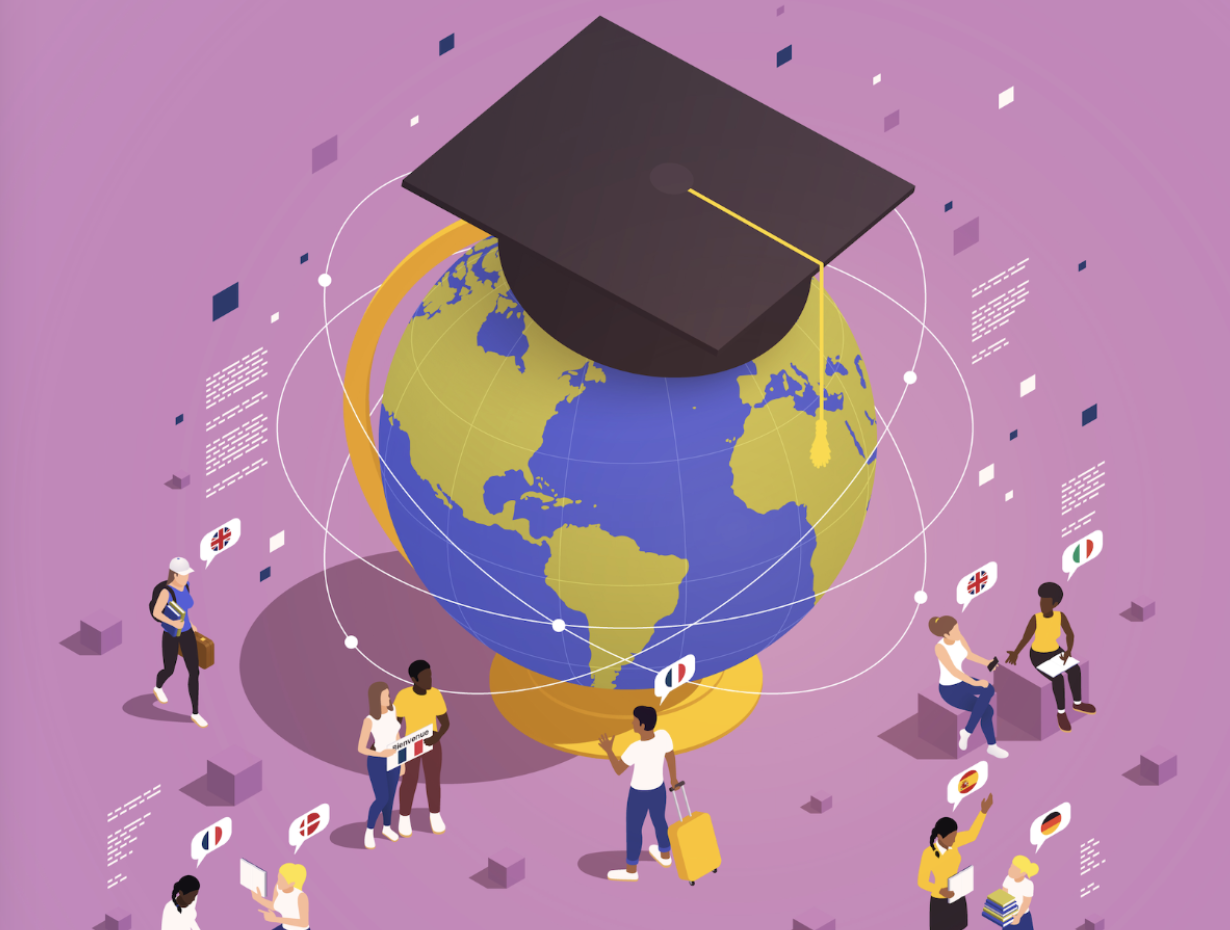
The U.S. is the most popular destination for studying abroad in the world. With its high-ranking universities and prestigious degree programs, it pulls a plethora of young minds from around the globe and is a melting pot for innovation and cultural exchange.
The U.S., Soft Power, and International Education
Education has historically been utilized as a tool of soft power diplomacy. While hard power denotes the use of military force and economic sanctions, soft power is a country’s ability to influence others without resorting to coercive pressure. This is often done through the sharing of ideals, values, and culture to foster goodwill and partnerships abroad. The U.S. invests a significant amount in promoting soft power through education through institutions such as EducationUSA, a network of 430 international student advisory centers dispersed across 175 countries. Additionally, the U.S. holds the highest number of high-ranking universities in the world, attracting foreign intellectuals who seek prestigious degrees. Beyond its international student advising and academic rigor, U.S. culture has its own magnetism. American football, sorority-fraternity tradition, and American pop culture attract curious students. It is this combination of accessibility, prestige, and culture that convinces over one million international students to study abroad in the U.S. each year. These international students, in turn, bring a range of economic, social, and political benefits to the United States.
An Array of Benefits
The presence of diverse intellectual talent greatly benefits the U.S. economy. In 2024 alone, foreign students generated 43.8 billion for the U.S. economy and supported more than 350,000 jobs. Foreign students often choose to stay in the U.S. to start their own companies as well. Take Hamdi Ulukaya, the founder of Chobani Greek yogurt. He came to the United States in 1994 before starting a company valued at over 10 billion dollars today. Additionally, Mike Kreiger, originally from Brazil, traveled to the U.S. in 2004 to attend Stanford University and eventually founded Instagram. It is undeniable that foreign students leave their mark on the U.S., channeling their diverse perspectives and drive into groundbreaking entrepreneurship. However, the impact of international students is not only economic. These students bring cultural diversity to U.S. campuses, which helps enrich college life. International student festivals and organizations help bring vibrancy to campus communities, and in the classroom, foreign students bring diverse perspectives that enhance critical thinking and global-mindedness. Additionally, the presence of international students in the U.S. promotes people-to-people diplomacy, helping to foster goodwill across borders. Not only does studying abroad increase awareness and connectivity to host countries, but it also influences policy support for that country. Many foreign internationals go back to their country of origin to become diplomats, business executives, or prominent political figures. These individuals often carry positive experiences with American society and are more likely to support political initiatives led by the U.S. Attracting international students is a powerful tool for advancing U.S. international strategic interests. However, recent changes to the U.S. political administration are reducing the appeal of studying abroad in America.
The Cost of Turning Away International Students
The recent weighing of a travel ban and spontaneous revocation of international student visas is creating a hostile dynamic for international students that is making the U.S. a less favorable country for studying abroad. Not only is this likely to decrease the number of international students coming to the U.S., but it also risks sending a message that the U.S. is intolerant of foreigners, making the country a less favorable political ally to work with. Allyships and collaboration are important because they allow for global protection of human rights, international trade deals, and the advancement of U.S. security interests abroad. In an increasingly globalized and interconnected world, international students are one of America’s most powerful diplomatic tools. If the U.S. wants to maintain its global influence, it must continue to invest in international education by expanding scholarship opportunities, streamlining the visa process, and funding cultural exchange programs to foster goodwill. Continued investment into international education to build lasting global connections is imperative for the U.S. diplomatic image and its strategic interests abroad.